The Sustainable Supply Chain Hub offers a a cohort-based platform that combines investment, procurement incentives, and supplier action to co-create and scale practical, bankable decarbonization solutions to achieve scalable, self-sustaining Scope 3 reductions.
Global supply chains are under growing pressure to cut Scope 3 (value chain) greenhouse gas emissions, the largest share of most companies’ carbon footprint. But many companies, especially in emerging markets, face challenges engaging suppliers, aligning incentives, and integrating climate goals into procurement and investment.
The Sustainable Supply Chain Hub (SSCH) offers a new, collaborative model: a cohort-based platform that combines investment, procurement incentives, and supplier action to co-create and scale practical, bankable decarbonization solutions. This approach enables industries to achieve scalable, self-sustaining Scope 3 reductions.
Our Impact
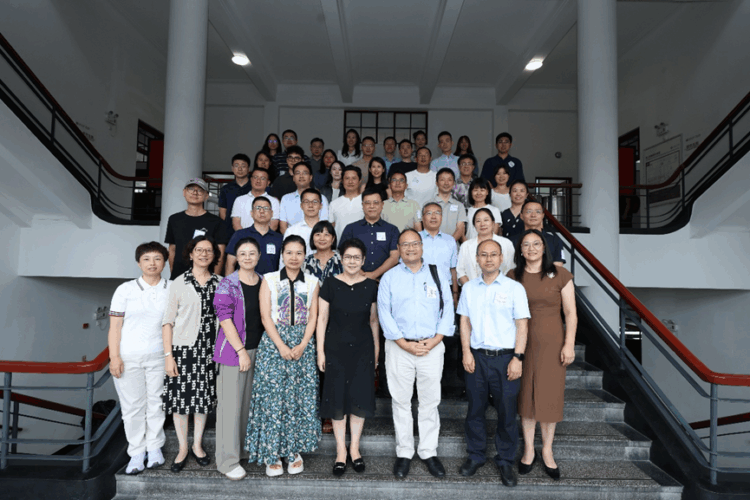
Although just beginning, the Sustainable Supply Chain Hub has already had significant impact. Since December 2024, SSCH has brought together leading automotive brands, suppliers, and industry partners to accelerate collaborative decarbonization. Through targeted mentoring, peer exchange, and project co-creation, the project is driving practical Scope 3 solutions across the sector.
SSCH by the Numbers
70 Hours
Project Learning
Through peer networking, case sharing, and project co-creation. Participants have also explored over 40 real-world decarbonization cases
70+ Representatives
From 33 Companies
Engaged in SSCH—including 6 major automotive brands and 12 key suppliers.
7 Concepts
Decarbonization projects
Co-created with project partners and participants
Testimonials
“This SSCH co-creation camp is like a martial arts assembly. People come from different
industries and schools, and everyone has unique skills. Although some people are veterans and
some have been in this field for a shorter time, the dual carbon cause must be combined with
different industries. No one dares to say that they have been very successful in one field and
can definitely succeed in another field. So this time, everyone is not competing with each other,
but truly and openly exchanging ideas. Like everyone else, I feel that time flies. I feel like I have
gained 10 years of experience. In the co-creation, we have an integrated team, real problems,
innovative solutions, and supportive mentors.”
– Wang Haisong, Ph.D., Director of Dual Carbon Business Products at Shanghai Electric Digital Technology
“With the knowledge I have gained from the mentors and peers in the SSCH co-creation cohort
project, I have also continuously interacted with our customers and suppliers. We need to
continuously drive our value chain to create and deliver value. This is a particularly important
message I got from the business model innovation in SSCH co-creation cohort. I am also very
happy to have the opportunity to share my experience in green finance. Thank you for such a
good platform for everyone to learn together!”
– Jin Diyi, Sustainability Manager at Suzano
Objectives
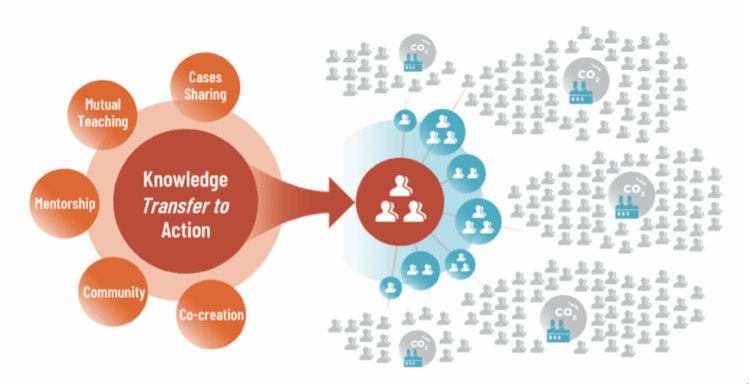
SSCH is dedicated to building a sustainability learning community among brand companies and key supply chain companies. The community will utilize a case-based and “All Teach All Learn” methodology for sharing knowledge and best practices among frontline industrial leaders, who play an essential role in the implementation of cost-effective carbon reduction solutions in factories across the supply chain. SSCH will further facilitate the networks of learning communities among companies and multi-stakeholders, increasing ecosystem cooperation, capacity, and productivity on Scope 3 carbon reduction in supply chains.
What We Do
By collaborating with partners, SSCH promotes a cohort-based carbon reduction learning community that focuses on transformation of knowledge to action. Each cohort lasts for an average of three months, combining online and in-person learning. Around 30 managers from both brand and supply chain companies will be brought together to co-create projects, supported by industrial mentorship, to
Establish
sustainable supply chain learning communities
Shift
from a one-way model to an interactive, supportive community network