In Our Neighbors We Trust: When Infrastructure Fails, Community Is All We Have
February 19, 2026 | By Rebecca Kaduru
 " class="img-fluid" alt="In Our Neighbors We Trust: When Infrastructure Fails, Community Is All We Have ">
February 19, 2026 | By Rebecca Kaduru
" class="img-fluid" alt="In Our Neighbors We Trust: When Infrastructure Fails, Community Is All We Have ">
The numbers are terrible: 137 dead, over a million without power, $1 billion in damages. But the numbers don’t tell you how numb your fingers get in your own house with no heat. They don’t explain the panic of having to move your family from location to location to find power while downed trees line your street.
I am a mother to two young girls; my youngest is not even a year old. And starting January 25th, I was without power for 8 days. Hopping between hotels, and spending thousands for my family to stay warm.
On January 30, 70,000 Nashville households were still in the dark. Not 70,000 people. 70,000 households. The actual number of Nashvillians freezing in their homes was far higher. Four people in Nashville had already died. Two from carbon monoxide poisoning—likely someone desperate enough to burn whatever they could find to stay warm.
The January 2026 winter storm wasn’t just another weather event. It was a glimpse of America’s climate future.
Meteorologists called it the worst ten days of winter in four decades. The storm system stretched more than 2,000 miles from New Mexico to New England, dumping ice and snow across 24 states and affecting 230 million Americans.
But it was the South, where climate infrastructure is notoriously weak, that bore the brunt of the catastrophe. Tennessee. Mississippi. Louisiana. Arkansas. States where infrastructure was never designed for this kind of sustained ice and cold. Stressed systems were pushed past their limit, and the result was post-apocalyptic.
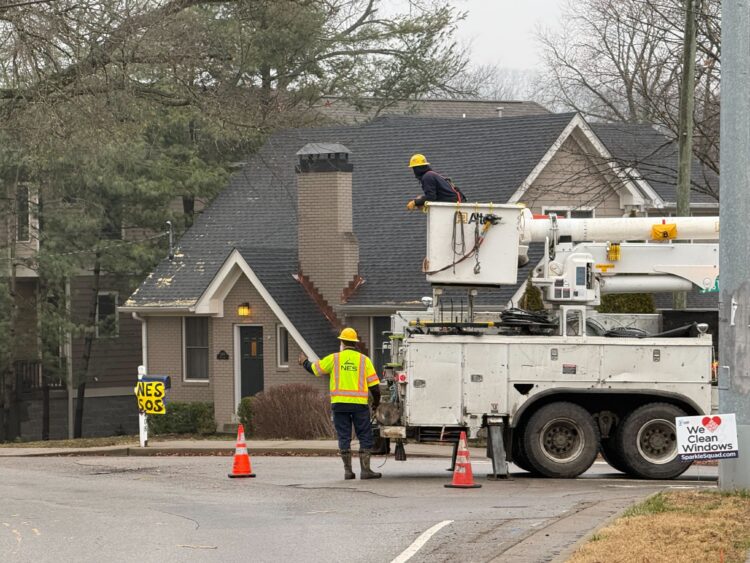
In Nashville, the Nashville Electric Services reported the worst outages in its history. At the peak, 230,000 customers—nearly half the city—had no power. Five hundred utility poles snapped under the weight of ice. Line workers restored one section only to watch in their rearview mirrors as another ice-laden branch took the line down again.
By the time the second Arctic blast approached—before the first round of victims had their power restored—the death toll in Tennessee alone had climbed to 21. Nationwide, the number exceeded 137.
Behind every outage statistic is a story like mine, or worse, like elderly residents who needed to drag their oxygen tanks to their cars because homes had no electricity. Climate disasters impact people’s ability to breathe in more than one way. People were trapped in their houses for days, roads covered with inches of ice and snow.
I was one of the lucky ones. I was able to find shelter for my family of four, moving locations multiple times to stay warm and powered. Not everyone has the privilege of having a safe place to go or the means to pay for a different location if local governments fail us.
At the same time, trust between neighbors, and between communities and government, is at an all-time low. We no longer rely on civic institutions the way we once did. Federal support meant to help communities build resilience has steadily eroded. In January 2025, key Environmental Justice grants were pulled back. One year later, the largest winter climate disaster in the South in 40 years hit. That erosion of trust and investment has now cost lives.
At Institute for Sustainable Communities, we were directly impacted by the cancellation of the Thriving Communities Environmental Justice Grant program in January 2025—$68 million intended to support infrastructure, youth, and older adults disappeared overnight. In April 2025, the administration canceled the Environmental and Climate Justice Block Grants (Section 138 of the Clean Air Act) and FEMA’s Building Resilient Infrastructure and Communities (BRIC) program.
BRIC was the largest climate adaptation initiative the federal government had ever funded. Since 2020, it had distributed $5 billion to help communities upgrade grids, strengthen infrastructure, and reduce disaster risk before catastrophe strikes.
The timing could not have been worse. FEMA had received applications for more than $5.6 billion in resilience projects—far exceeding available funding. Studies consistently show that every dollar invested in hazard mitigation saves $6–13 in future disaster costs.
Instead, $882 million in funding for projects already underway was rescinded. Hundreds of millions in mitigation projects were thrown into limbo. Programs focused on flood mitigation, emergency response training, and long-term recovery were eliminated or severely cut.
A FEMA spokesperson justified the cancellation by calling BRIC “wasteful and ineffective… more concerned with climate change than helping Americans affected by natural disasters.”
Tell that to the 230,000 Nashville households who shivered in the dark on a storm that hit – an ironic one year to the day since the federal government initially froze these programs. Tell that to anyone who needed electricity to breathe, who needed heat to warm the bodies of their children. Tell that to the families of the 137 dead.
The message is clear: communities are on their own.
What happened in Nashville is not an anomaly. It’s the result of a collision between intensifying climate disasters and collapsing federal support for resilience.
Without proactive investment, most disaster spending now goes toward emergency response after systems fail—rather than prevention. This is the most expensive, most destructive way to manage risk: paid for in lives lost, families displaced, and communities destabilized.
Nashville needed a grid designed for today’s climate. Buried power lines in critical areas. Distributed energy systems that don’t collapse when one pole fails. Better coordination, equipment stockpiles, and preparedness. These are exactly the kinds of projects resilience programs were built to fund.
Research shows that communities that have stronger connections and higher levels of social resources at the neighborhood level are more resilient. Regardless of the community’s economic status, neighborhoods with more social resources were viewed by their residents as more resilient.
As I write this, thousands of Nashville residents are still without power, more than a week after the storm. A second winter system is approaching the Southeast and Northeast, threatening to hit communities before they’ve recovered from the first. The pattern will continue: another storm, another crisis, less time to prepare, and fewer federal resources to help.
The question isn’t whether we’ll invest in resilience. The question is whether we’ll invest proactively or whether we’ll pay the full price in lives, suffering, and economic devastation after each disaster strikes.
We know climate disasters are coming. We know our infrastructure is inadequate. We know how to build resilience. We even know it saves money.
What we’re learning, in the brutal calculus of lives lost and communities frozen in the dark, is whether philanthropy has the foresight to fund those organizations willing to put together the time and effort it takes to support and build infrastructure. We are here and willing, but we cannot do it alone.
The next storm is not a matter of if, but when. And when it comes, there will be more families who will be impacted, some in the most final way.
Unless we choose differently.
This article was originally written on February 2, and may not reflect the full impact of Winter Storm Fern. The January 2026 winter storm killed at least 137 people across 24 states. As of February 2, thousands remain without power, with a second winter system approaching. The Building Resilient Infrastructure and Communities and the Thriving Communities Grant Making programs, which funded the exact type of infrastructure improvements that could have prevented these failures, were canceled in April 2025. Every state and five territories lost critical hazard mitigation resources as a result.

Nashville, TN
Rebecca Kaduru joined ISC as its third president in September 2023 after nearly 15 years of working at the intersection of community development, climate, and social enterprise. Prior to joining ISC, Rebecca was the Chief Strategy and Impact Officer at UpStart where she led a national social impact accelerator program supporting CBOs working to drive systems change across the United States. She previously held the position of Managing Director of North America for Solidaridad, a global nonprofit organization that builds more equitable, global supply chains. Rebecca co-founded KadAfrica, a social enterprise in East Africa that supports out-of-school girls and young women building sustainable agriculture value chains in rural communities.